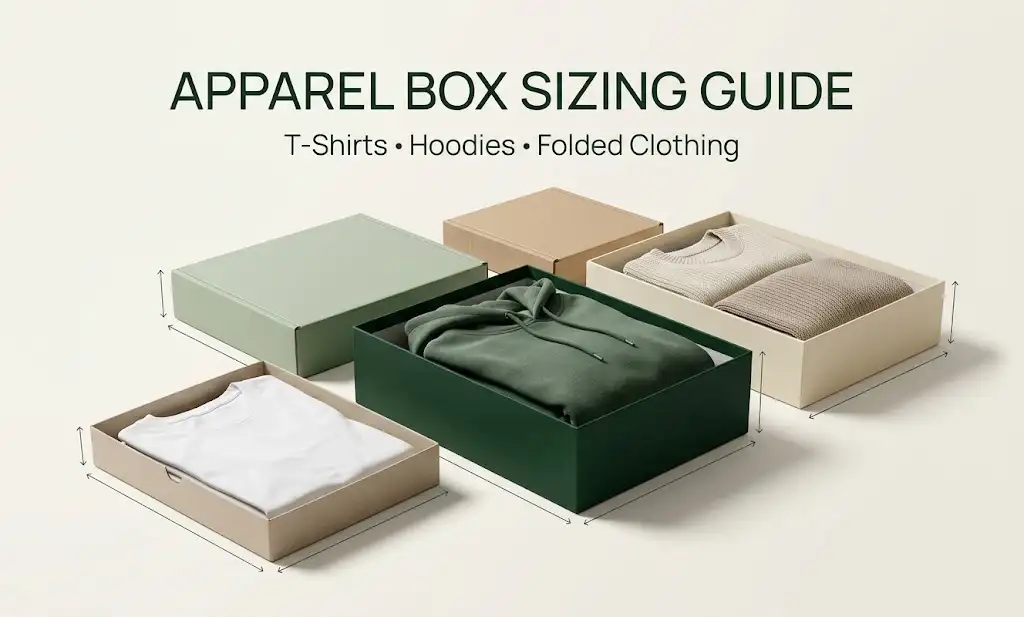
Packaging matters a lot in retail and gifting. For clothing, the right box protects the garment and makes it look good the moment it’s opened. Apparel boxes come in many sizes, so choosing one can feel confusing. Too big means higher shipping costs. Too small means a creased shirt. If you’ve felt stuck, you’re in good company. This comprehensive guide explores the dimensions, sizes, and even delves into the DIY line of apparel boxes, covering a variety of clothing items from T-shirts to accessories like ties and belts
Key Takeaways
- Size the box around the folded garment, not the garment size on the tag.
- Hoodies need extra depth because fleece folds thick.
- Leave 0.25–0.5″ of clearance for tissue and inserts.
- Pick the board and box style based on whether the box will sit on a shelf or travel in the mail.
Why Box Size Matters More Than You Think
A box is the first thing your customer touches. A shirt that slides around loosely feels careless. A shirt squeezed into a tight lid feels cheap. A snug, well-sized box says the product inside is worth the price.
Size also affects your costs. Oversized boxes use more material and take up more storage space. They can also push your shipping into a higher price bracket. Undersized boxes lead to returns, bad reviews, and wasted stock. Getting the size right once saves money on every order after it.
How to Measure Your Folded Garment
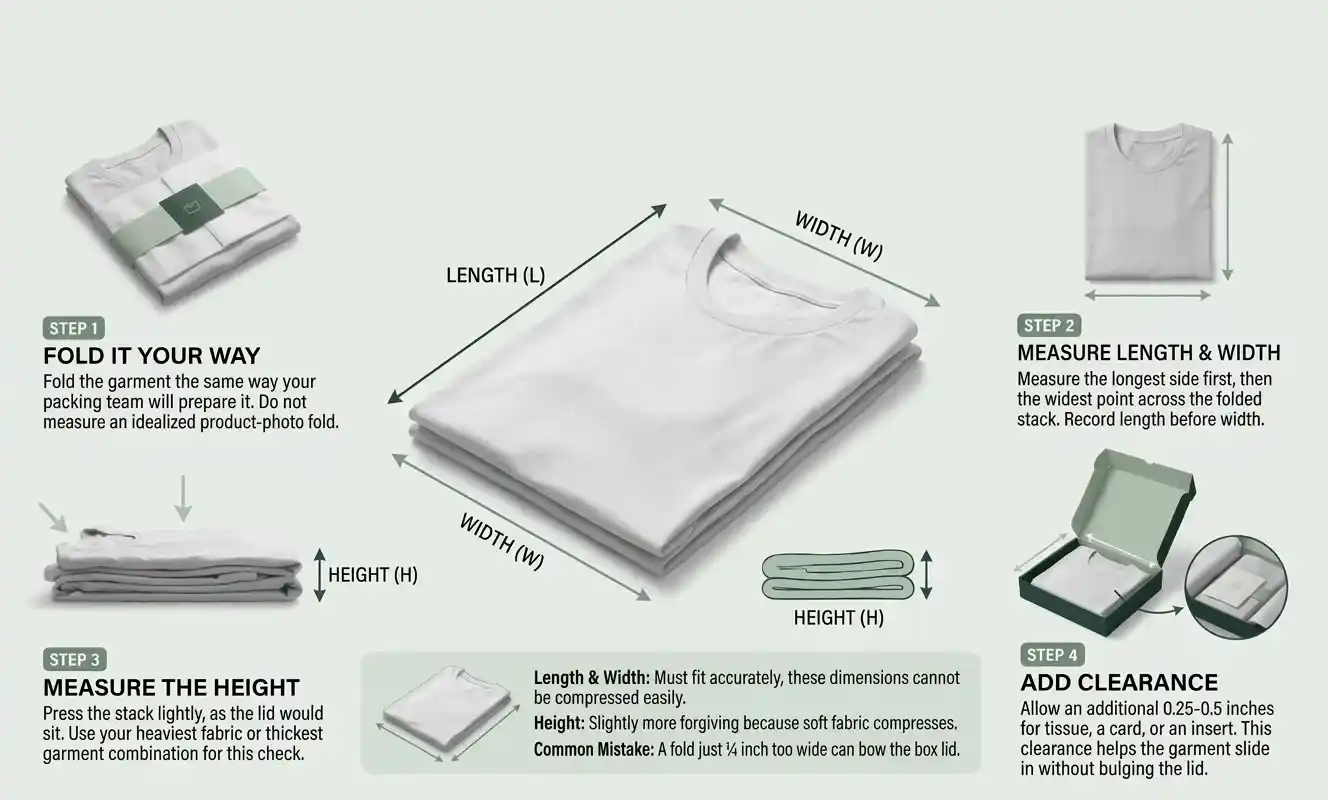
You only need a ruler and one finished sample. Here is the simple method.
- Fold it your way: Fold the garment exactly as your packing team will, including tissue or a belly band. Don’t use the neat fold from a product photo.
- Measure length and width: Check the widest point of the folded stack. Write the longer side first.
- Measure the height: Press the stack lightly, the way a lid would sit. Use your heaviest fabric for this check.
- Add clearance: Add 0.25–0.5″ for tissue, a card, or an insert. Clearance is just the small gap that lets the garment slide in without bulging the lid.
Soft goods squash a little, so height is forgiving. Length and width are not. A fold that is a quarter inch too wide can bow the lid.
Choose a Folding Method First
Your fold decides your box, so settle it before you order. A flat retail fold creates a wide, shallow stack. A tight roll creates a narrow tube that suits a mailer. A quarter fold makes a squarer stack that fits gift boxes well.
Pick one method and train your packing team to use it every time. Mixed folds lead to mixed sizes, and then no single box fits properly. If you sell both tees and hoodies, set one standard fold for each product. Write it down and keep a sample on the packing table.
Internal vs External Size, and How Much Clearance to Add
Internal size is the space inside the box, where your garment sits. External size adds the board thickness on every side. The gap is small on a thin carton and bigger on a rigid box. Always ask your supplier which one they quote, so the numbers match your measurements.
Mailers lie flat and expand to hold the garment, so add at least 0.5″ to length and width. Also keep an eye on dimensional weight. Carriers can bill by box volume, so an oversized box costs more even when the shirt is light.
T-Shirt and Shirt Box Dimensions
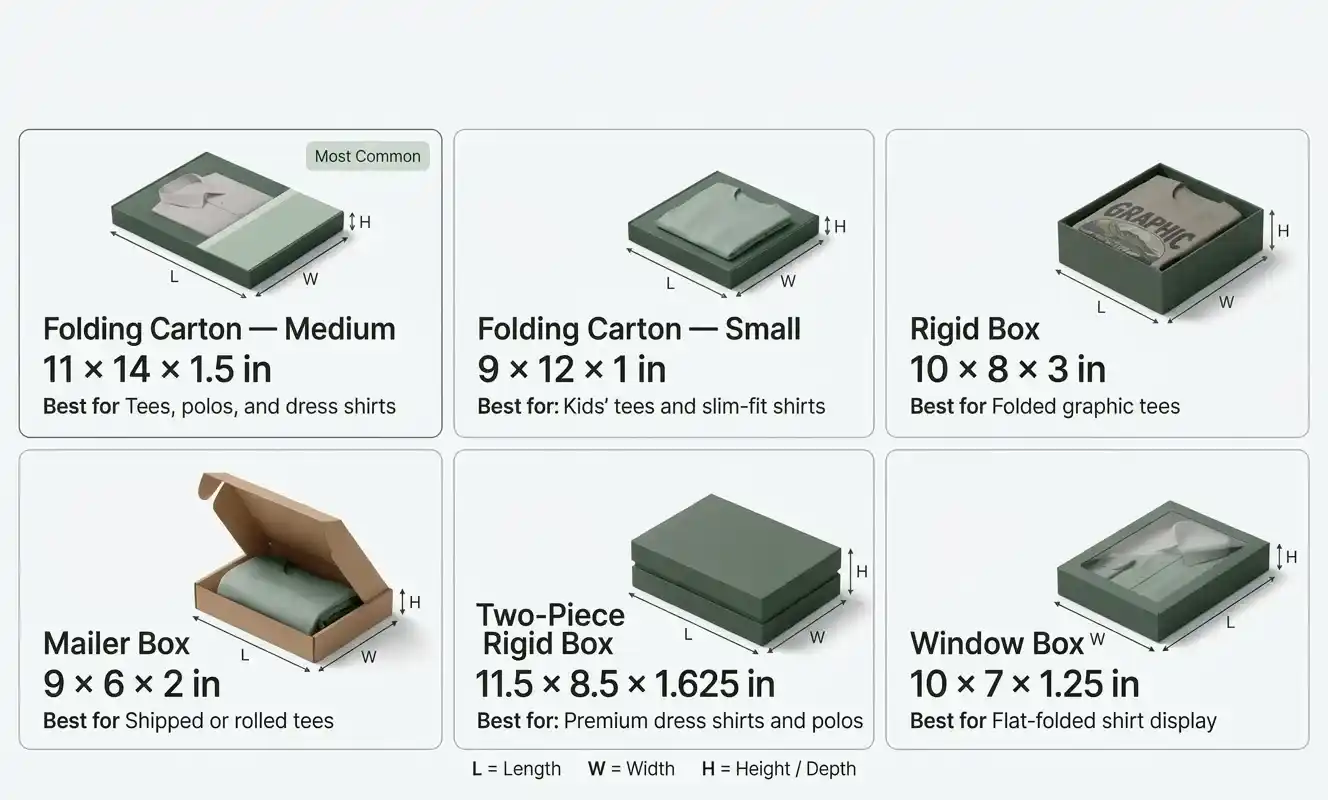
These are the standard shirt box sizes most brands start with, and they also work as folded T-shirt dimensions. The medium carton at 11 x 14 x 1.5 inches is the most common size. Our custom shirt boxes follow the same footprints.
| Box type | Size (L x W x H, in) | Best for |
| Folding carton, medium | 11 x 14 x 1.5 | Tees, polos, dress shirts (most common) |
| Folding carton, small | 9 x 12 x 1 | Kids’ tees, slim fits |
| Rigid | 10 x 8 x 3 | Folded graphic tees |
| Mailer | 9 x 6 x 2 | Shipped or rolled tees |
| Two-piece rigid | 11.5 x 8.5 x 1.625 | Premium dress shirts, polos |
| Window box | 10 x 7 x 1.25 | Flat-folded shirt display |
Tip: Use a slim carton for retail shelves and a corrugated mailer when you are shipping T-shirts.
Hoodie Box Dimensions
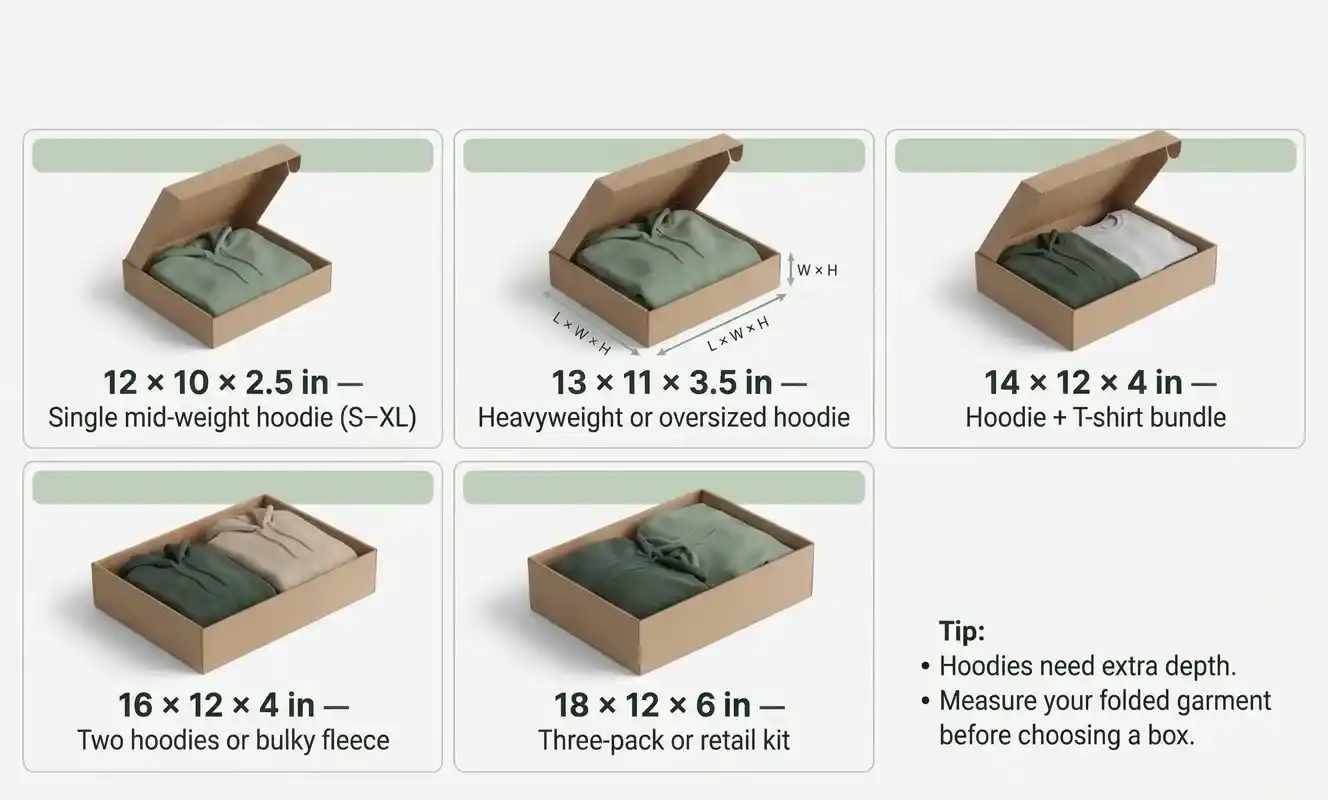
Fleece folds thick, so depth matters more here than on a shirt. Use these inner sizes as starting points for hoodie packaging sizes, then check them against your own fold.
| Size (inner, in) | Best for |
| 12 x 10 x 2.5 | Single mid-weight hoodie (S–XL) |
| 13 x 11 x 3.5 | Heavyweight or oversized, with tissue |
| 14 x 12 x 4 | Hoodie + tee bundle |
| 16 x 12 x 4 | Two-pack or bulky fleece (mailer) |
| 18 x 12 x 6 | Three-pack or retail kit (shipper) |
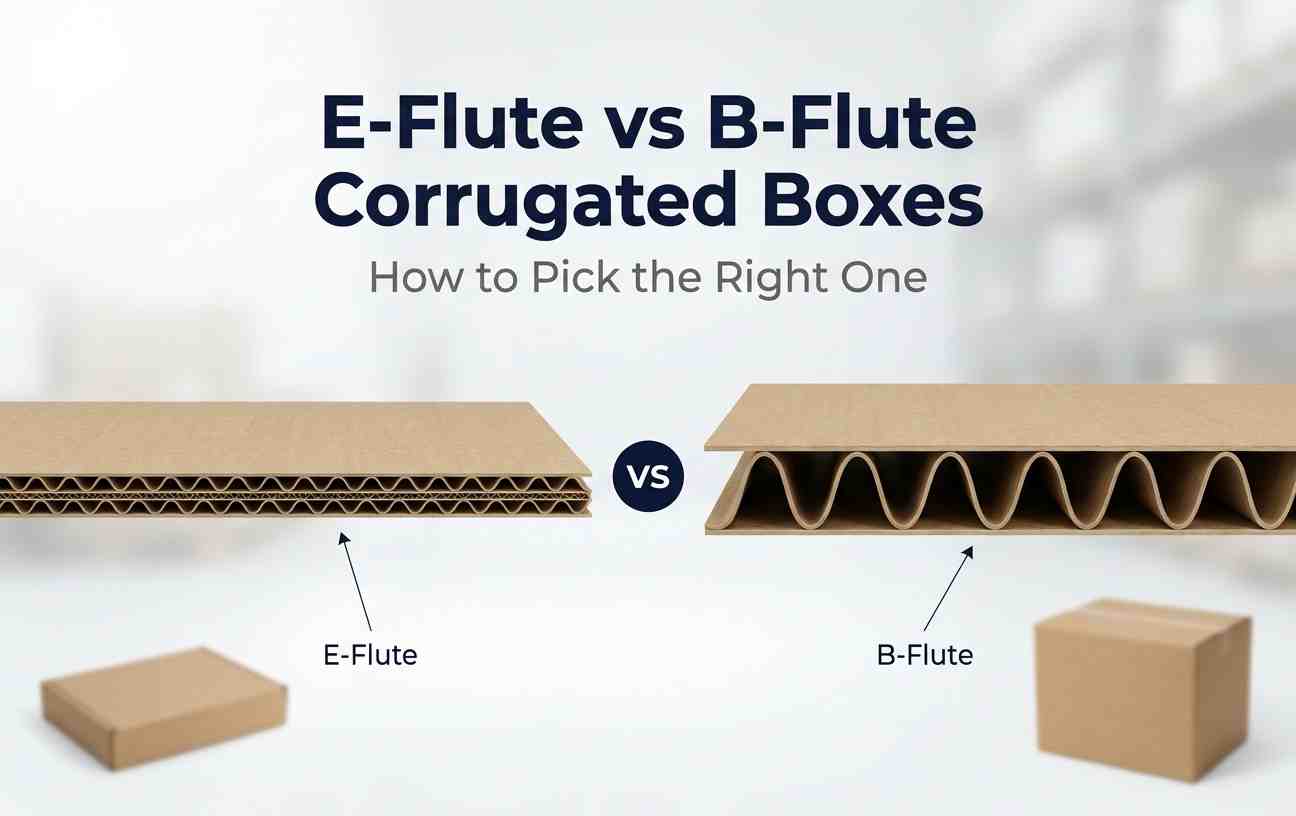
Tip: Choose B-flute, a thicker corrugated board, for a heavyweight hoodie, and add a divider in two-packs. When packing heavyweight hoodies, you need a stronger wall profile.
Folded Clothing Box Dimensions
Trousers, knitwear and sweaters need shallow, wide boxes that keep the fold flat. These rigid box dimensions suit most folded clothing.
| Box type | Size (L x W x H, in) | Best for |
| Rigid | 15 x 9.5 x 2 | Trousers, light knitwear |
| Rigid | 17 x 11 x 2.5 | Sweaters, blazers |
| Heavy rigid | 18 x 14 x 4.5 | Heavy wool sweaters, gowns |
Tip: A rigid box is not a shipper, so use a corrugated outer carton.
Picking the Right Board and Box Style
Size is only half the decision. The board you choose decides how well the box protects your garment.
- A folding carton is light and affordable. It suits retail shelves and gift sets, but it can dent if it gets crushed in transit.
- Corrugated board is the best choice for shipping. Single-wall board works for light tees. B-flute adds strength for heavy fleece and bundles.
- Rigid board gives the most premium feel. It holds its shape and feels like a gift. It is heavier and costs more, so save it for high-value pieces such as dress shirts and gift sets.
If you are unsure, match the board to the journey. A box that stays on a shelf can be lighter. A box that travels across the country needs more protection.
Retail Display vs Shipping
Ask one question before you order: where will this box spend most of its life?
A retail box needs to look good on a shelf. It should stay clean, hold a crisp edge, and show off your branding. Window boxes work well here, since customers can see the fabric without opening the lid.
A shipping box needs to survive handling. It should resist crushing, moisture, and rough stacking. Looks matter less than strength, though a printed mailer can still make a strong first impression.
Many brands use both. They pack the garment in a rigid or carton box, then place it inside a corrugated outer carton for delivery. This keeps the unboxing special and the shipping safe.
5 Common Mistakes to Avoid
- Sizing by width only. A folded hoodie needs depth for the stack too.
- Shipping a rigid box bare. It looks great but isn’t built to travel alone.
- Using thin board for a heavy hoodie. Thick fleece can crush a light wall.
- Skipping the divider in a two-pack. Loose items shift and crease.
- Treating tissue as optional. It protects the fold and adds to the unboxing.
FAQs
1. What is the standard size of a shirt box?
A standard shirt box measures 11 × 14 × 1.5 inches, suitable for most T-shirts, polos, and dress shirts. Smaller shirts may fit 9 × 12 × 1-inch boxes.
2. How to Measure Apparel Box Dimensions Correctly?
Fold the garment as it will be packed, then measure its length, width, and height. Add 0.25–0.5 inches of clearance for tissue paper and inserts.
3. What is the best box size for shipping clothes?
For T-shirts, a 9 × 6 × 2-inch mailer suits rolled or shipped tees. For a single mid-weight hoodie, 12 × 10 × 2.5 inches is a good starting point. Always measure the folded garment before ordering.